Table Of Content
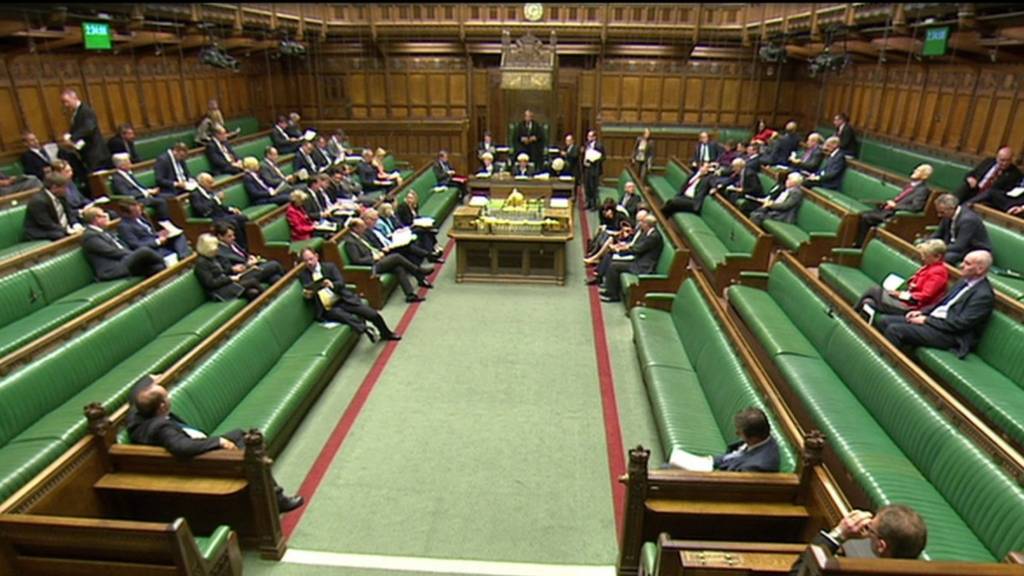
The Reform Act of 1918 gave women the right to vote, and the first woman was elected to the body that same year. During Henry IV’s time on the throne, the role of Parliament expanded beyond the determination of taxation policy to include the “redress of grievances,” which essentially enabled English citizens to petition the body to address complaints in their local towns and counties. By this time, citizens were given the power to vote to elect their representatives—the burgesses—to the House of Commons. In the 14th century the knights and burgesses chosen as representatives (i.e., the commons) began sitting in a separate chamber, or “house,” from that used by the nobles and high clergy (i.e., the lords). In 1986, the British television production company Granada Television created a near-full size replica of the post-1950 House of Commons debating chamber at its studios in Manchester for use in its adaptation of the Jeffrey Archer novel First Among Equals. The set was highly convincing, and was retained after the production—since then, it has been used in nearly every British film and television production that has featured scenes set in the chamber.
Hollywood isn’t just a place for celebrities to live in Los Angeles
The House of Lords debates legislation, and has the power to amend or reject bills. However, the power of the Lords to reject a bill passed by the House of Commons is severely restricted by the Parliament Acts. Under those Acts, certain types of bills may be presented for Royal Assent without the consent of the House of Lords (i.e. the Commons can override the Lords' veto). The House of Lords cannot delay a money bill (a bill that, in the view of the Speaker of the House of Commons, solely concerns national taxation or public funds) for more than one month. The first parliament to invite representatives of the major towns was Montfort's Parliament in 1265. At the "Model Parliament" of 1295, representatives of the boroughs (including towns and cities) were admitted.
The 30 most beautiful buildings in Los Angeles
Much of the nobility was killed on the battlefield or executed for participation in the war, and many aristocratic estates were lost to the Crown. Moreover, feudalism was dying, and the feudal armies controlled by the barons became obsolete. Henry VII (1485–1509) clearly established the supremacy of the monarch, symbolised by the "Crown Imperial". The domination of the Sovereign continued to grow during the reigns of the Tudor monarchs in the 16th century. The Crown was at the height of its power during the reign of Henry VIII (1509–1547). The power of Parliament grew slowly, fluctuating as the strength of the monarchy grew or declined.
The Adventurers’ Club
Coming up in the Commons 15- 19 April - Committees
Coming up in the Commons 15- 19 April.
Posted: Fri, 12 Apr 2024 13:23:28 GMT [source]
These two houses, however, weren’t always joined, and had their earliest beginnings in the Anglo-Saxon council governments of the 8th century. If the House is big enough for all its members, nine-tenths of its debates will be conducted in the depressing atmosphere of an almost empty or half-empty Chamber.…[T]here should be on great occasions a sense of crowd and urgency. 1 "Bailiwick-wide" legislation passed in the States of Guernsey applies not only in Guernsey, but also in Alderney and Sark, with the consent of their governments.2 Although Island Councils for Ascension and Tristan da Cunha exist, they are purely consultative. Legislation is enacted by the Governor, although this power is normally exercised on their behalf by an Administrator. Formerly, if a member sought to raise a point of order during a division, suggesting that some of the rules governing parliamentary procedure are violated, he was required to wear a hat, thereby signalling that he was not engaging in debate.
House of Commons sittings in Westminster Hall - Commons Library
House of Commons sittings in Westminster Hall.
Posted: Thu, 11 Apr 2024 07:00:00 GMT [source]
Parliamentary sovereignty
These venerable, intimidating Downtown institutions were never the only clubs in town, but maybe it was that apparent binary that inspired LA’s huge proliferation of private, members-only societies. If you want to indulge in a little retail therapy, Rodeo Drive is the place for you. There’s everything from Wolfgang Puck’s renowned Spago to places for hot dog lovers like Vicious Dogs and Pinks. That means you can work a corporate day job and still enjoy time hiking in the splendor of nature in an area that’s bigger than Central Park. You can also stop by the Griffith Observatory to see the stars in space rather than the ones in Tinsel Town.
State Opening of Parliament
In 1653, when leading figures in this Parliament began to disagree with the army, it was dissolved by Oliver Cromwell. However, the monarchy and the House of Lords were both restored with the Commons in 1660. The influence of the Crown had been decreased, and was further diminished after James II was deposed in the Glorious Revolution of 1688 and the Bill of Rights 1689 was enacted.
In fact, when Mary and William died (in 1694 and in 1702, respectively), the legislature established new protocols for succession, and named George of Hanover king. When Parliament passed the “Test Act,” which prevented Catholics from holding elected office, the legislature was at odds with King James II, himself a Catholic. After years of political in-fighting during the Glorious Revolution, Parliament deposed James II in 1689 and his eldest daughter Mary and her husband William of Orange ascended to the throne. During this time, too, Parliament began to take on more authority within the English government. In 1362, for example, it passed a statute decreeing that Parliament must approve all taxation. The present-day Parliament is a bicameral (“two chambers”) legislature with a House of Lords and a House of Commons.
Membership
Although this area specifically appeals to millennial hipsters, it still attracts a diverse mix of young adults. This area provides easy access to DTLA and Hollywood and surrounding neighborhoods like Echo Park and Angelino Heights, which is great for commuting and checking out the latest in these areas. The crowned portcullis came to be accepted during the early 20th century as the emblem of both houses of parliament. In the case of the House of Commons, the Speaker goes to the Lords' Chamber at the beginning of each new Parliament and requests representatives of the Sovereign to confirm the Lower House's "undoubted" privileges and rights.
One Green Mile – Public Space and Streetscape Design by StudioPOD

Acts passed in 1921 and 1925 granted the Church of Scotland complete independence in ecclesiastical matters. From 1973 to 2020, under membership of the European Community and European Union, parliament agreed to the position that European law would apply and be enforceable in Britain and that Britain would be subject to the rulings of the European Court of Justice. In the Factortame case, the European Court of Justice ruled that British courts could have powers to overturn British legislation that was not compatible with European law. This position ended with the passing of the European Union (Withdrawal Agreement) Act 2020 and Britain leaving the EU on 31 January 2020.
The Act provided, as a measure intended to be temporary, that 92 people would continue to sit in the Lords by virtue of hereditary peerages, and this is still in effect. The Conservative–Liberal Democrat coalition agreed, after the 2010 general election, to outline clearly a provision for a wholly or mainly elected second chamber, elected by proportional representation. As an interim measure, appointment of new peers would reflect the shares of the vote secured by the political parties in the last general election. The Labour Party had, for most of the 20th century, a commitment, based on the party's historic opposition to class privilege, to abolish the House of Lords, or at least expel the hereditary element.
When the House of Stuart came to the English throne in 1603, the dependence of the Crown on Parliament for sufficient revenue to fund the operations of government returned as an issue and point of leverage. The first two Stuart monarchs, James I and Charles I, provoked conflicts with the Commons over issues such as taxation, religion, and royal powers. Theoretically, the Sovereign may either grant or withhold royal assent (make the bill a law or veto the bill). In modern times the Sovereign always grants royal assent, using the Norman French words "Le Roy le veult" (the King wishes it; "La Reyne" in the case of a Queen).
These titles derive from the Committee of Ways and Means, a body over which the chairman once used to preside; even though the committee was abolished in 1967, the traditional titles of the Deputy Speakers are still retained. The House of Commons formally scrutinises the Government through its Committees and Prime Minister's Questions, when members ask questions of the prime minister; the house gives other opportunities to question other cabinet ministers. Questions must relate to the responding minister's official government activities, not to their activities as a party leader or as a private Member of Parliament. Customarily, members of the Government party/coalition and members of the Opposition alternate when asking questions. In 1707 it became the House of Commons of Great Britain after the political union with Scotland, and from 1801 it also became the House of Commons for Ireland after the political union of Great Britain and Ireland. In 1922, the body became the House of Commons of the United Kingdom of Great Britain and Northern Ireland after the independence of the Irish Free State.


No comments:
Post a Comment